Don't miss our holiday offer - up to 50% OFF!

Market Trends of Sweeping Robot Accessories
Market Trends of Sweeping Robot Accessories
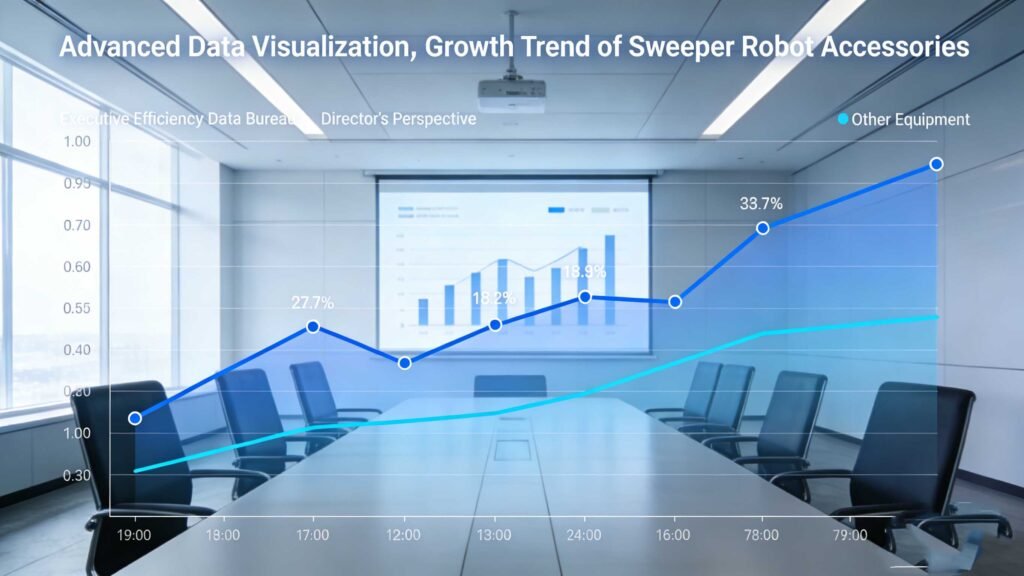
The global market for sweeping robot accessories is experiencing steady growth, driven by the rising penetration of smart home devices and increasing consumer demand for maintenance-friendly products. As of 2023, the market size reached approximately $5 billion, with a projected compound annual growth rate (CAGR) of 15%-20% through 2028, expected to surpass $8 billion by then. Core accessories such as roller brushes, side brushes, filters, batteries, and dust boxes dominate the market, accounting for over 60% of total sales, with roller brushes alone valued at $633 million in 2024 and forecast to hit $1.01 billion by 2031 at a CAGR of 6.4%.
Technological innovation is a key driver of market evolution. High-end accessories are integrating intelligent features, such as smart dust boxes with real-time usage monitoring and anti-tangling roller brushes equipped with comb teeth and cutting modules. Biomimetic designs and dynamic diameter-expansion technologies are enhancing edge coverage and terrain adaptability. Meanwhile, domesticization of core components like LDS sensors is reducing costs, boosting the affordability of premium accessories. Profitability varies significantly: high-tech accessories such as smart dust boxes and HEPA filters yield 30%-40% margins, while basic parts like standard dust bags hover around 10% due to homogenization.
Regional markets show distinct characteristics. North America leads with a 35%+ share, followed by Europe at 30%, fueled by high smart home adoption. The Asia-Pacific market, particularly China and Japan, is growing rapidly and projected to capture 25% of the global market by 2028. Online channels dominate distribution, accounting for 45% of sales with 50%-60% channel margins, while offline stores and third-party service outlets hold steady shares with 30%-40% and 35% margins respectively.
Sustainability has become a critical trend, driven by stringent environmental policies. Manufacturers are adopting recyclable plastics and biodegradable fibers for brushes and dust bags. Customization for niche needs, such as pet hair-resistant brushes and baby-safe filters, is gaining traction. Looking ahead, 5G integration and smart home ecosystem expansion will further propel demand for intelligent accessories, with high-end product margins expected to rise to 45% by 2028.